
When we moved here, we let the garden do its thing for a year to see what was what. It became apparent that the previous owners had a penchant for large, thuggish and often invasive species. We found, among many other things, a colossal Gunnera tinctoria (invasive, banned), an effusive pampas grass (Cortaderia selloana) stuck right outside the kitchen window obscuring much of the view of the garden, and a small monkey puzzle tree (Araucaria araucana). These exotics feel a little strange within what appears to be remnants of old woodland.
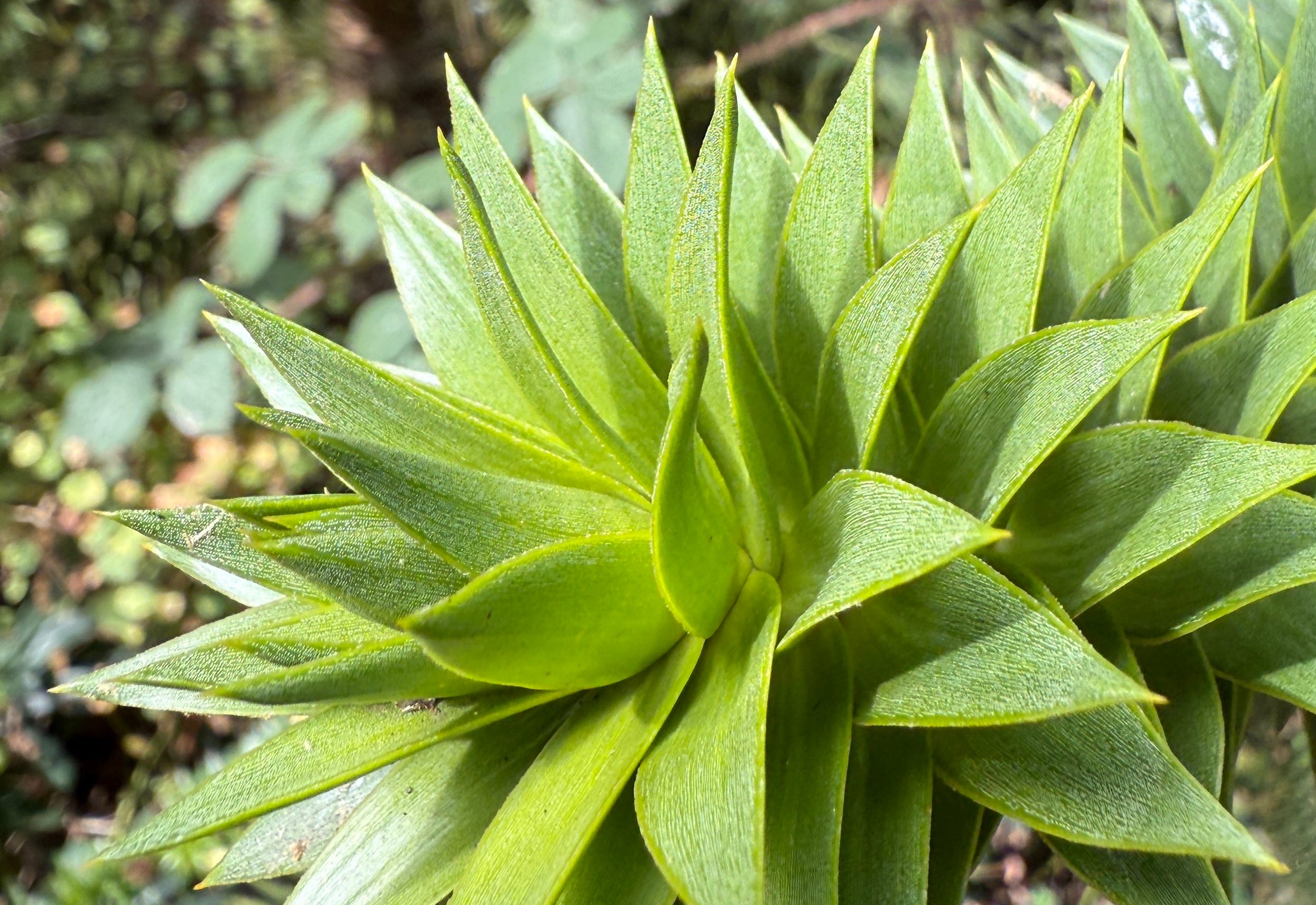
We removed the pampas grass with some effort and razor-leaf ripped skin, and the Gunnera, which was taking over a large area at the bottom end. I pondered over removing the monkey puzzle, it being quite close to a full size ash, and knowing that they can grow to a tremendous height.
I did a bit of research while deciding if I really wanted to keep an enormous and dangerously spiky tree around. I’ll spare you the complete natural history, which you can look up here, here or here if you like, but here’s a taster: they tolerate very low temperatures, to around -20°C, and can survive being covered in snow for months; they take 30-40 yrs to mature and start to produce cones; its fossil gives us the mineraloid gemstone (Whitby) jet.
I also found out that this native of the Andes is under threat, from drought, wildfires, illegal logging, over-grazing, and various other human activities like excessive seed harvesting. Being easily eclipsed by more competitive tree species makes recovery difficult. Trading in the species is now protected by CITES, and despite having been around for around 170 million years, they are now classed as Endangered in the Red List of Threatened Species (International Union for Conservation of Nature), meaning they are at very high risk of extinction in the wild.
So I thought I’d better keep it.
I’ve grown to admire and delight in a tree I’d never really considered before, except as a bit of a gimmick. As long as you don’t touch it — those leaves are devilishly sharp — it is quite the sculptural piece, hardy as can be and quite settled in its current position. Ours is not very old, around 3m tall so maybe ten years, and is unlikely to set cones during my lifetime, but if it is allowed to survive the next custodians may be lucky. The slowness of its growth won’t really affect the other trees adversely, nor cause it problems of its own. I have seen only jays land in it, not even a squirrel, such is the difficulty of the terrain, but it is well colonised by spiders, a very safe haven for them indeed.
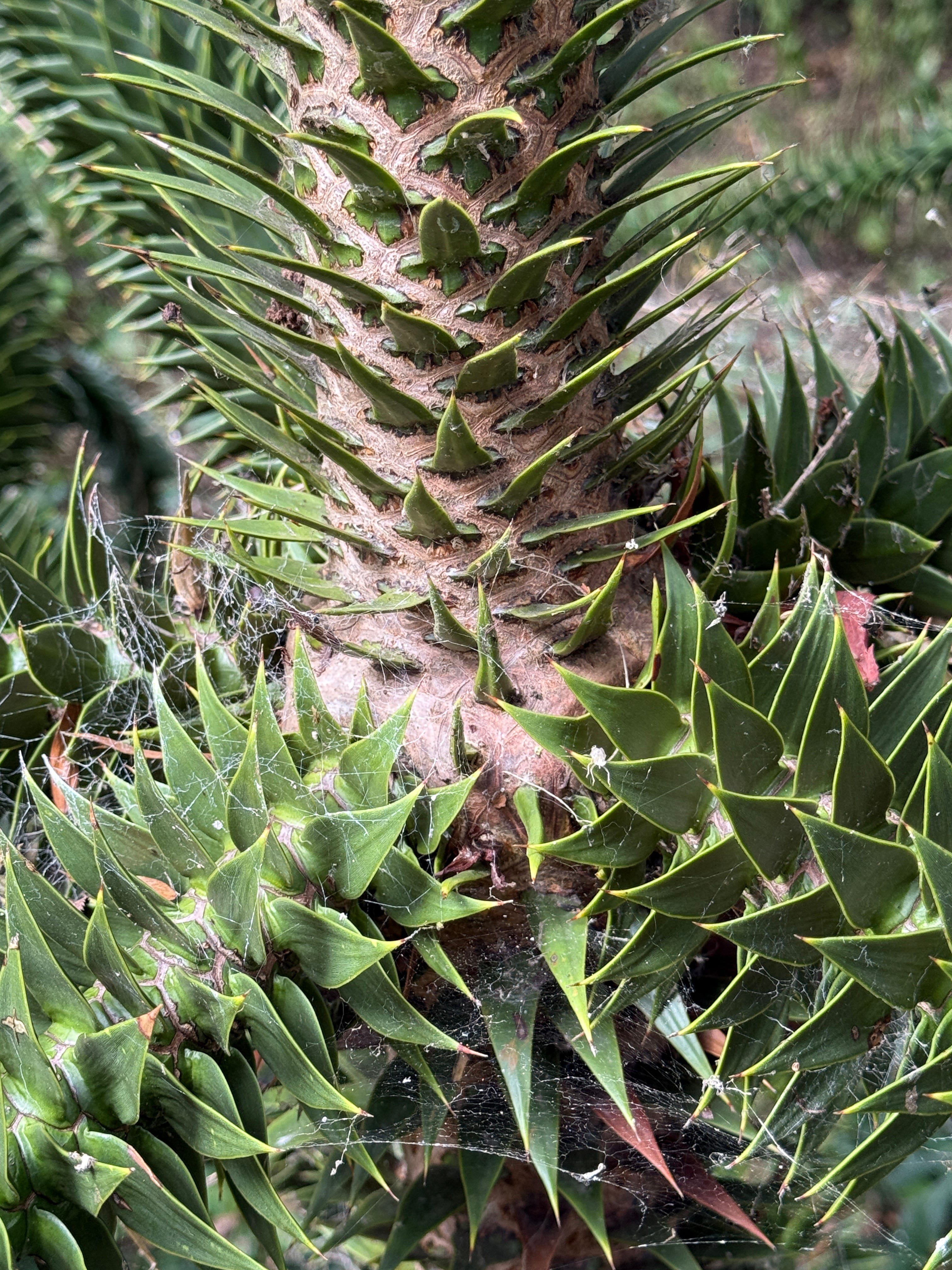
So the monkey puzzle gets to stay, and I get to feel connected to South America, the Jurassic period, and the slow, steady and imperceptible development of a stately ancient being, with the potential to be around in over a thousand years’ time.
I wish it safe passage.
Thank you for reading.
For more about JB Priestley’s book Delight, from which I take these cues, please take a look here

How wonderful Sally that you have decided to keep your Monkey Puzzle tree. I have a baby one in a pot, about 3 ft tall. We cal him Spike, which is obviously his speciality. A Victorian legacy, either love them or loathe them. I think they look rather exotic and I'm very fond of my specimen. 🌴